A weak weld can affect an entire metal assembly. Before a project starts, one of the first questions is which welding process fits the job. MIG and TIG welding are two of the most common options, and they work quite differently. This guide explains the difference between MIG and TIG welding, the benefits of each, and how to choose the right one for your project in Chicago, IL.
What Is MIG Welding?
MIG stands for metal inert gas welding. It creates a continuous bond between metal pieces using a wire electrode and shielding gas. The wire feeds steadily through the welding gun and acts as both the electrode and the filler metal. This steady feed makes the process efficient for jobs with long seams or repeated welds across several sections.
MIG welding is commonly used on carbon steel, stainless steel, and aluminum. The wire, gas, and settings change depending on the metal being welded. It suits frames, brackets, supports, panels, equipment parts, and many repairs.
What Is TIG Welding?
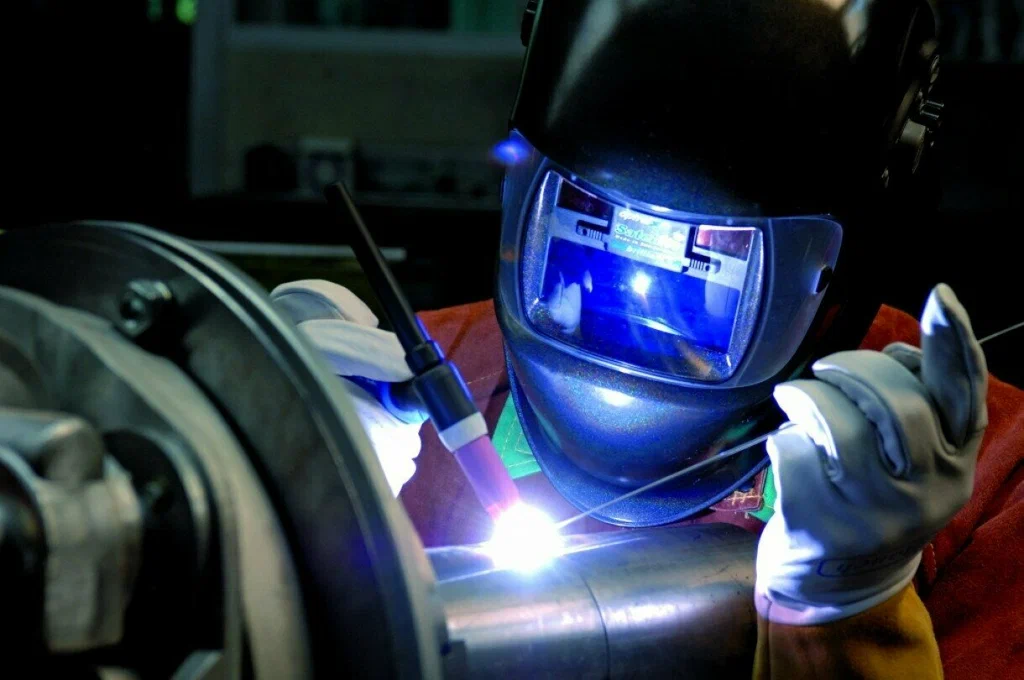
TIG stands for tungsten inert gas welding. It uses a non-consumable tungsten electrode to create an electric arc that melts the metal, while shielding gas protects the weld area from air contamination. The welder adds filler metal separately when the joint needs it.
This setup gives the welder close control over heat and weld placement. TIG welding is well suited to detailed work on aluminum, certain steels, and stainless steel. It is also a good fit for thin metal parts and projects where the finished joint stays visible, since it typically produces a smooth finish with little spatter.
Key Differences Between MIG and TIG Welding
| Factor | MIG Welding | TIG Welding |
|---|---|---|
| Electrode | Consumable wire fed continuously | Non-consumable tungsten; filler added separately |
| Speed | Generally faster for longer seams | Generally slower and more deliberate |
| Control | Good, with steady weld placement | Very precise heat and weld control |
| Finish | Clean results, may need more cleanup | Smooth, neat, low spatter |
| Best for | Fabrication, repairs, repeated welds | Thin metals, visible joints, detailed work |
| Skill demand | More forgiving | More demanding, hands-on technique |
Why Speed and Control Matter
The core trade-off is productivity versus precision. MIG welding keeps the wire moving, so a welder can cover more ground in less time. That helps with larger fabrication jobs and projects with tight schedules. TIG welding slows things down on purpose. Because the welder manages the arc and the filler separately, they can control every part of the weld.
That control matters on thin metals, where too much heat can cause burn-through or distortion. It also matters for work where appearance counts.
Benefits of Each Process
Benefits of MIG welding:
- Efficient for fabrication, equipment components, and general repairs
- Steady wire feeding and controlled weld placement
- Works across many metal types and thicknesses
- Good for projects with several connected joints
Benefits of TIG welding:
- Excellent heat control for thin or delicate parts
- Clean, smooth finish with less spatter
- Well suited to stainless steel and aluminum
- Ideal for custom parts and visible joints
TIG welding isn’t the best choice for every job. Thick metal, large production runs, and projects with tight deadlines may suit other methods better. Heavier structural work and outdoor repairs are often handled with stick welding instead.
How to Choose Between MIG and TIG Welding, Step by Step
- Identify the metal. Aluminum, stainless steel, and carbon steel each respond differently to heat and need different preparation.
- Check the thickness. Thin sections usually benefit from TIG’s heat control. Heavier sections and longer seams often favor MIG.
- Consider appearance. If the weld will be visible, TIG’s finish is often worth the extra time.
- Think about volume and schedule. Repeated welds or tight timelines usually point toward MIG.
- Consider the work environment. Shielding gas can be disturbed by wind, so outdoor jobs may call for a different approach.
- Share the details. Photos, measurements, drawings, and the part’s purpose help a welder recommend the right process. This is especially useful for custom welding projects where the part isn’t available off the shelf.
If you’re unsure, an honest assessment is the best starting point. Not every damaged part is suited to welding, and sometimes replacement makes more sense.
Get the Right Weld for Your Project
Choosing between MIG and TIG comes down to the metal, thickness, joint design, appearance, and how the part will be used. T&C Welder Service LLC brings more than 10 years of experience to repairs, custom work, and fabrication in Chicago. If you’re near Brookfield, see our MIG welding in Brookfield, IL page.
Ready to talk through your project? Contact us, or call +1 773-565-8942 or email tncwelderservice@gmail.com for a free quote.